
Do Trades Need a Website If They Already Have Facebook?
Short answer: yes. A Facebook page gets you seen by people who already follow you. A website gets you found by people who’ve never heard of you, on Google and in AI answers.
Most of the trades we speak to have a busy Facebook page and a good name locally, and think that's enough. It works, up to a point. But a Facebook page only reaches people who already know you. It can't be found by the homeowner in Haywards Heath who has never heard of you and is typing “plasterer near me” into Google, or asking an AI assistant who to call. Here's what a Facebook page can and can't do, and what a proper website adds.
Do I need a website if I already have a Facebook page?
Yes, if you want work from people who don't already know you. Facebook is good for showing recent jobs to existing customers and their friends. But when someone needs a plumber, electrician or builder they've not used before, most start with a Google search or Google Maps. A Facebook page is a poor fit for that moment, and often doesn't appear at all.
Can a Facebook page show up on Google?
Sometimes, but rarely where it matters. Google usually favours proper websites for local searches like “electrician in Lewes” or “roofer in Chelmsford”. A Facebook page has limited titles, no control over the page structure, and no way to add the information search engines look for. A website is built around exactly those things, so it can rank for the searches that bring in new customers.
Can AI assistants recommend a Facebook page?
Far less reliably than a website. More people now ask ChatGPT, Google's AI answers and similar tools things like “who's a good plasterer in Haywards Heath?”. These tools answer from pages they can read, understand and quote. A website can state plainly what you do, where you work and what you charge, in text an AI can lift straight into an answer. On a Facebook page, that information is scattered across posts, buried in a feed, or hidden behind a login prompt.
This is the biggest change in the last couple of years, and it's why we build every site with clear, readable text and structured information behind it, not just a nice design.
Who owns my Facebook page?
Meta does. Every post, photo and review you've built up lives on a platform you don't control. Pages get restricted, hacked or shut down, sometimes with little warning and no easy way to appeal. If it happened to you tomorrow, you would lose your reviews, your photos and your only way of being found. A website is yours: your domain, your content, and nobody can switch it off.
Will customers trust a Facebook page as much as a website?
Many won't. People now expect to find a website before they commit to a job, especially for bigger or more expensive work like an extension, a rewire or a new roof. A Facebook page alone can feel unfinished, or make people wonder whether you're still trading. A clean website with your work, your reviews and clear contact details tells them you're an established business.
Is Facebook still worth using?
Yes, as a partner to your website, not a replacement. Organic reach on Facebook and Instagram has become harder to come by, and pages increasingly have to pay for ads just to reach the people who already follow them. But it's still a good place to show off recent jobs and stay in front of past customers. Here is how the two work best together:
- Facebook and InstagramShow recent jobs, share tips, and keep past customers and their friends thinking of you.
- Google Business ProfileAppear on Google Maps and in “near me” searches, with reviews and opening hours.
- Your websiteThe home base everything points to. It's where a stranger decides to call you, and what Google and AI assistants read to decide whether to recommend you.
What does a website for a tradesperson cost?
Our Trades package is a fixed £500, agreed in writing before we start. There's no monthly fee and no template. Each site is hand-coded, fast on a phone, and built so search engines and AI assistants can read it. If you want something simpler, our Landing page starts at £400. You can see everything that's included on the packages page, or use the Find My Package quiz if you're not sure which fits.
How long does it take to get a trade website?
Most trade sites are live within a few weeks of us getting your photos and details. We do the writing and set-up, and you approve it before it goes live. You don't need to learn any software.
What should you do next?
Keep your Facebook page, and give it a proper home. If you're a plumber, electrician, builder, roofer or another trade in Sussex, Kent, Essex or London, take a look at our websites for trades, or have a quick chat and we'll tell you honestly what you need and what it costs.
Frequently asked questions
How much does a website for a plumber, electrician or builder cost?
Our Trades package is a fixed £500, agreed in writing before we start, with no monthly fee. It includes up to 4 pages, a working contact form, local search set-up and a year of domain, hosting and support.
Can I keep using my Facebook page as well?
Yes, and you should. Use Facebook to show recent jobs and stay in touch with past customers, and use your website as the place everything points back to.
Will my website show up on Google?
A well-built website gives you a far better chance of appearing for local searches like “roofer in Chelmsford” than a Facebook page. No one can promise a specific ranking, but our Trades package includes local search set-up so Google understands what you do and where.
Do AI assistants like ChatGPT recommend businesses without a website?
They answer from pages they can read and quote, so a website with clear text about what you do, where you work and what you charge gives them something to use. A Facebook page rarely does.
Do I need to be technical to have a website?
No. We write and set everything up, and you approve it before it goes live. You can also edit your gallery, opening hours and a notice banner yourself, without touching any code.
Keep reading
More from the blog.
What a Great Trade Website Really Needs (And Why Most Don’t Have It)
Most trade websites miss the basics customers expect. Here’s what every tradesperson’s site needs to build trust and win more local work.Read the article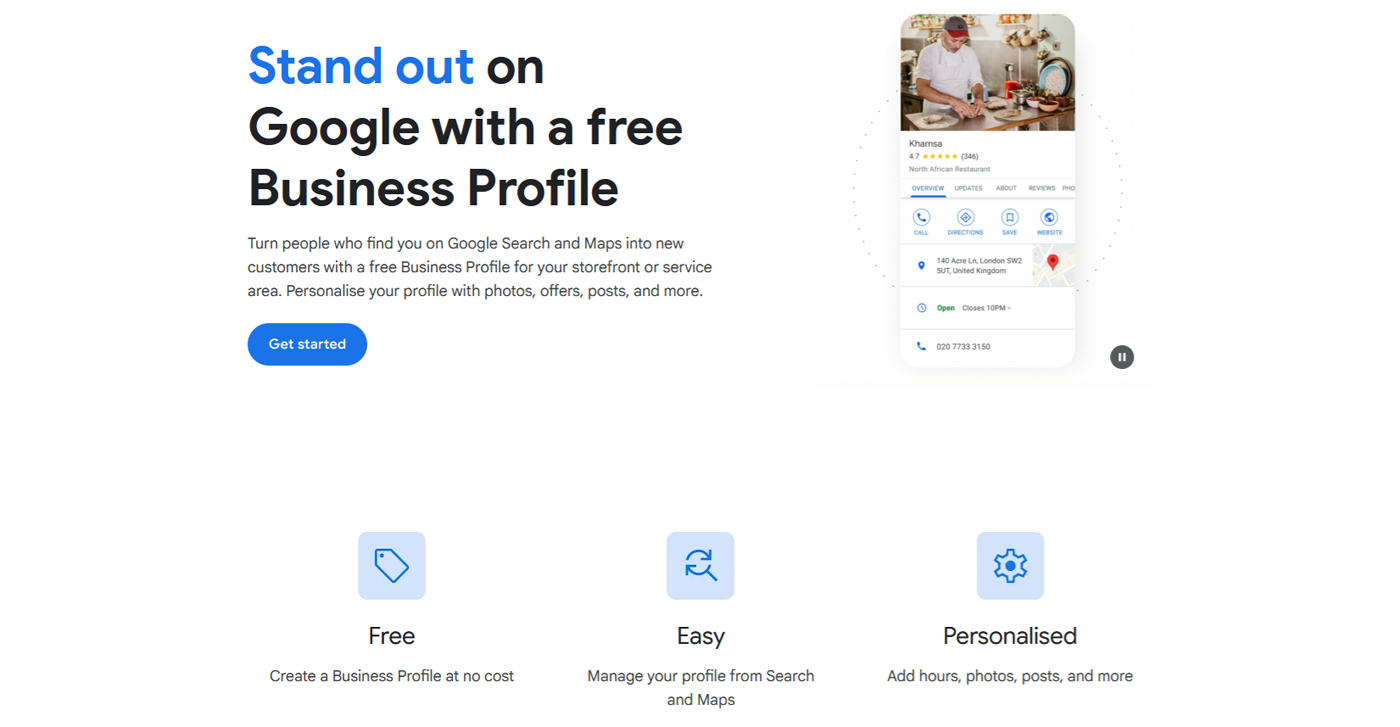
Is Google Good for Small Business? Key Benefits and Considerations
Discover how Google visibility helps small businesses attract more customers and build trust online.Read the article
A Beginner's Guide To Owning Your First Website.
A clear, jargon‑free introduction to domains, hosting, pages, and what a small business or trade website really needs to get started.Read the articleA website that works as hard as you do.
Fixed prices from £400, agreed in writing before we start. No templates, no monthly fees, no jargon.